GUT is uncompromisingly the “brave agency for brave clients”. How does Gut Asia put that into practice? Explore that here.
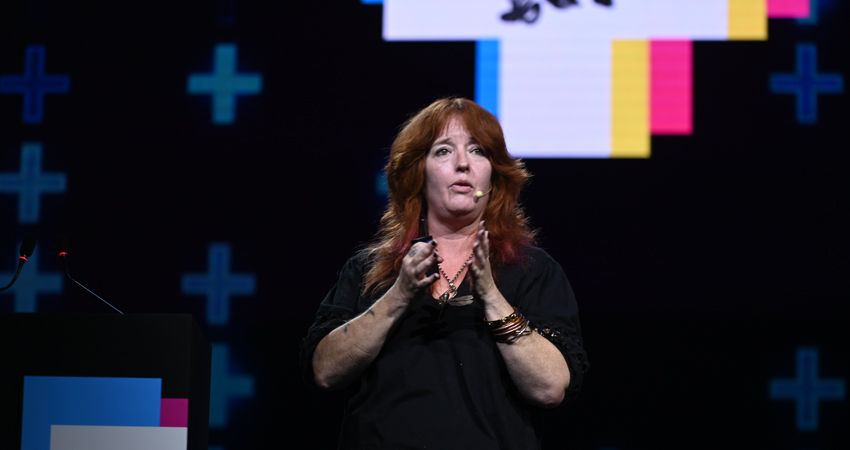
In an industry increasingly driven by data, AI, and scale, it is easy to believe that numbers hold all the answers. But at ADFEST 2026, Jessica Davey, Managing Director Asia at GUT Singapore, and Creative Director Meyvi Wedelia offered a different perspective. One that feels both refreshingly human and quietly radical.
Their message was simple. Data informs, but gut transforms.
The session, titled No Gut, No Glory: GUT Instinct, explored the role of intuition in creativity at a time when technology is reshaping how ideas are made and measured. It began with a striking reminder. The gut, often referred to as our second brain, contains around 500 million neurons, compared to the brain’s 86 billion. Yet despite its biological significance, intuition is often overlooked in favor of logic, metrics, and optimization.
For creatives, that imbalance comes at a cost. Creativity has always been fueled by instinct. It is where bravery, humor, surprise, and emotional nuance come from. Data, on its own, cannot tell you what feels right, what resonates culturally, or what will truly move people. It can highlight patterns and identify problems, but it cannot create meaning.
This is where the gut comes in. As Davey and Wedelia explained, data starts the conversation. It gives you facts. But without intuition, those facts remain static. The gut bridges the gap, turning information into insight, and insight into ideas that connect on a human level.
One example shared during the session focused on Japan, where data revealed that 98 percent of the population is deficient in vitamin D, largely due to long working hours spent indoors. On paper, it is a public health issue. But instead of delivering a straightforward message, the Corona campaign approached it through a cultural lens.
Inspired by the Japanese appreciation for imperfection and overlooked beauty, the campaign highlighted “impossible flowers” growing in unexpected places such as cracks in pavements or corners of buildings. These small, resilient plants became a poetic reminder to step outside, pause, and reconnect with sunlight. It was not just informative. It was meaningful, because it spoke to a deeply rooted cultural sensibility.
Another example demonstrated how intuition, paired with bravery, can turn data into impact.
With 1.6 million road accidents caused by distracted driving, the insight was clear. The challenge was how to address it in a way that cuts through. The solution came through an unexpected collaboration between Calvin Klein and Bad Bunny. Using bold, attention-grabbing billboards featuring the artist, the campaign leaned into distraction, only to redirect it. Messages embedded within the visuals nudged drivers to refocus on the road. The result was a campaign that generated over 416 million media impressions.
The third example showed how gut instinct can directly drive business results. Data revealed that 61 percent of men wish they received flowers, yet social norms position them almost exclusively as givers. The DoorDash campaign, Bouquets for Living Men, challenged this stereotype with humor and a touch of irreverence. By encouraging people to send flowers to men while they are still alive, rather than waiting for funerals, the campaign reframed the category. The unexpected idea resonated, leading to a 31 percent increase in sales.
Across all these cases, one pattern emerged. Data identified the opportunity. But it was intuition that made the work land.
For GUT Asia, the takeaway is not about choosing between technology and instinct. It is about understanding their roles. Technology can process, optimize, and scale. But it cannot replicate courage, emotional intelligence, or cultural sensitivity.
There is no prompt that can replace bravery. No algorithm that can manufacture genuine human insight.