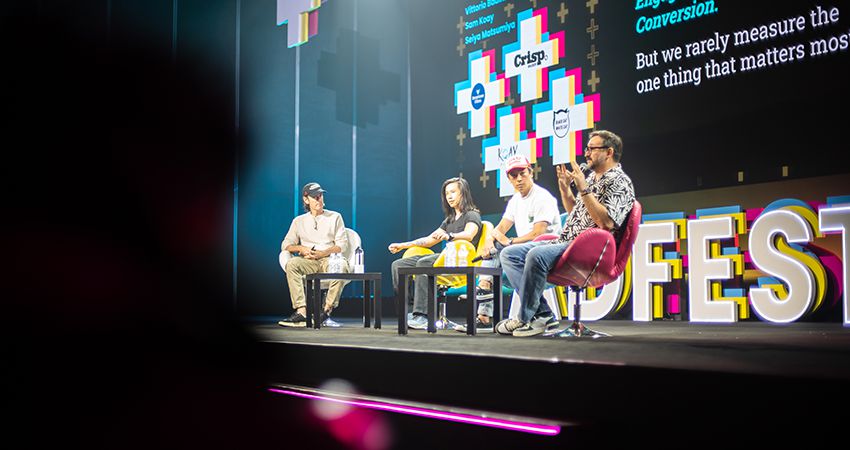
At ADFEST 2026, one of the most thought-provoking sessions reframed how the industry defines success. Feeling Is the New KPI challenged a long-standing reliance on metrics like clicks, likes, and conversions, arguing that emotional impact is the only measure that truly lasts.
Led by Chris Gurney, Co-Founder and Chief Creative and Innovation Officer of Crisp Group in Tokyo, alongside director Sam Koay of Koay Films in Kuala Lumpur, the session introduced the Human+ creative framework. The concept is simple but powerful: combine the speed and efficiency of AI with the emotional intelligence, instinct, and lived experience of humans.
Using the Toyota Advantage campaign as a central case study, the speakers demonstrated how this balance plays out in practice. AI was used extensively in early-stage development, from idea exploration and voiceover rhythm testing to music sketches, visual mood boards, and rapid pre-visualization. These tools helped accelerate clarity and alignment across teams and markets, particularly in collaborations involving global partners like Google. But when it came to defining the story, shaping performances, and refining emotional tone, human judgment led to every decision.
This distinction reflects a broader shift happening across the industry. For years, agencies competed in craft and execution. Cinematography, CGI, and production scale were key differentiators. Today, AI has made many of these tools widely accessible, effectively leveling the playing field. High production value is no longer a competitive advantage; it is a baseline.
What now sets creative work apart is point of view. More importantly, it is the ability to make people feel something.
As audiences become more exposed to content and more selective with their attention, traditional metrics are losing their meaning. Visibility alone is not enough. The work must resonate. It must linger. It must create an emotional imprint that outlasts the scroll.
This is where the Human+ approach becomes critical. AI can enhance speed, efficiency, and adaptability, but it cannot replicate human experience. It does not understand cultural nuance, emotional subtlety, or the complexity of shared values. These are the elements that transform content into storytelling.
The session emphasized the importance of building collaborative ecosystems that keep humanity at the center. Vittorio Badini Confalonieri, Head of Production at Benetone Films Advertising in Bangkok, highlighted the role of craft and on-set performance in bringing authenticity to life. Seiya Matsumiya, Founder and CEO of Black Cat White Cat Music in Tokyo, spoke about how music anchors emotion and gives narrative its depth. Together, they reinforced the idea that while AI can support the process, the outcome depends entirely on human taste and intuition.
Another key takeaway was the role of relatability. Despite cultural differences, people share fundamental emotions and experiences. Effective storytelling starts from this common ground, then adapts to reflect the brand’s message and context. AI can help refine and scale these ideas, but the core insight must come from a human perspective.
The speakers also explored how storytelling techniques can amplify emotional connection. A narrative might begin with familiar, nostalgic visuals created through traditional filming, then transition into AI-generated imagery that reflects a more futuristic tone. Sound design, music, pacing, and even subtle visual cues such as a zoom or pause all contribute to how a story is felt, not just understood.
Ultimately, the message was clear. In an era where technology is abundant and accessible, humanity is the true differentiator. AI can support, streamline, and accelerate. But it is human insight, emotion, and storytelling that define the work.